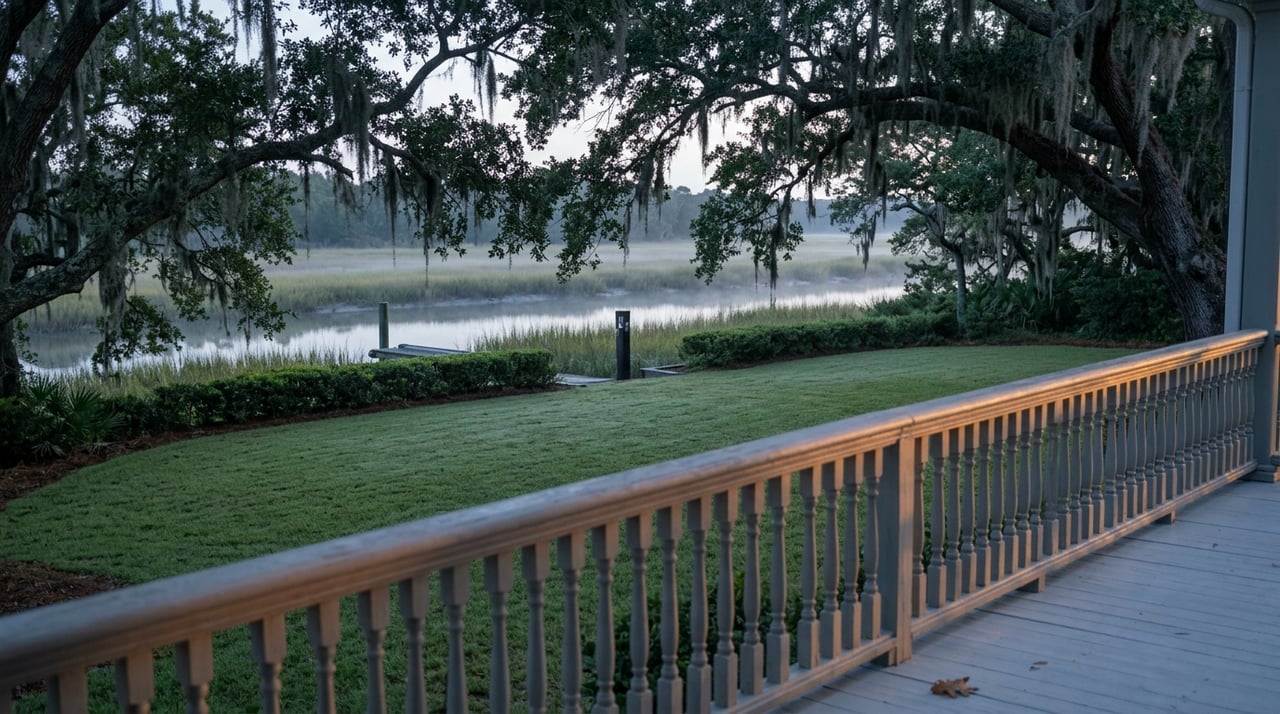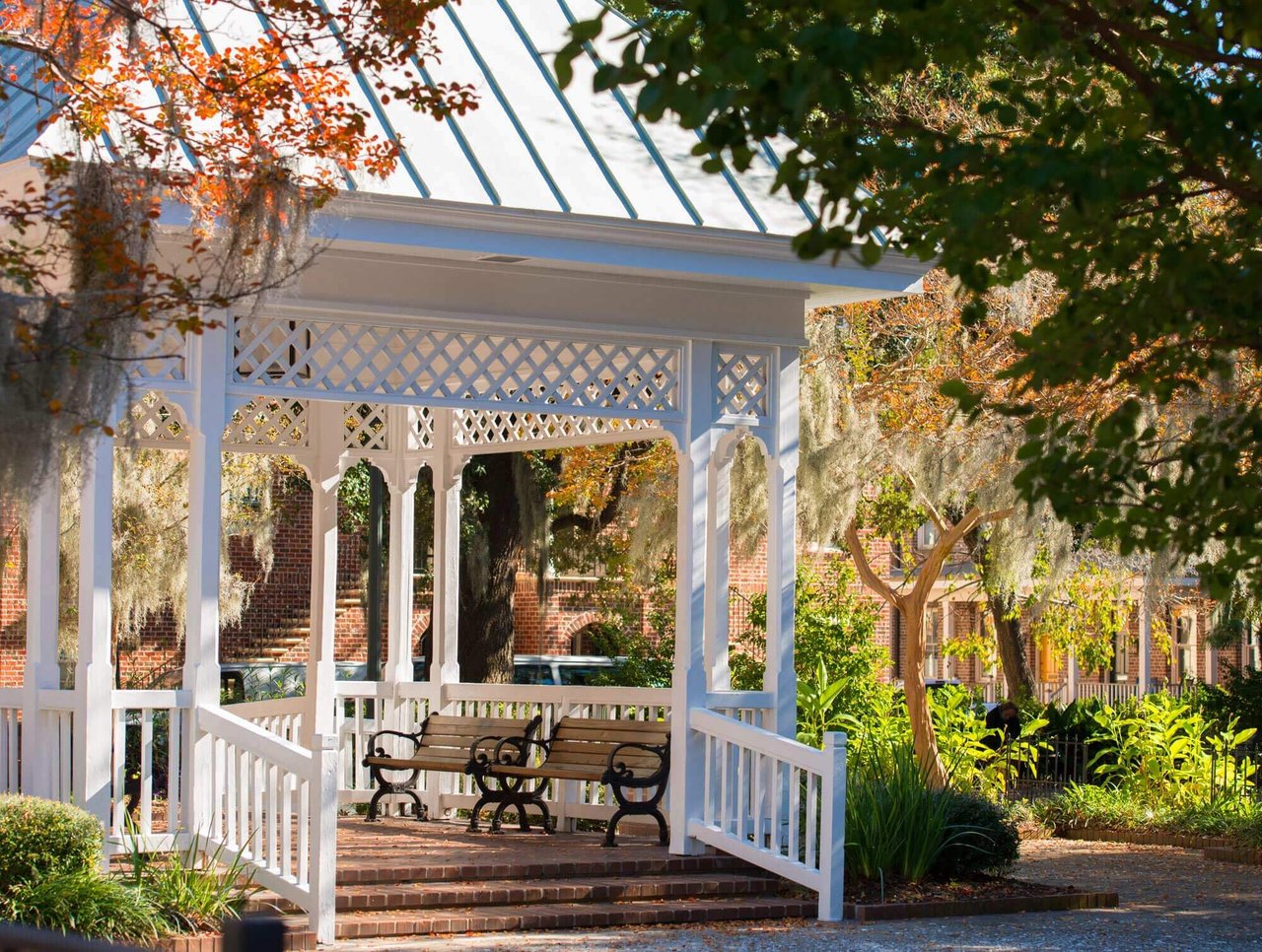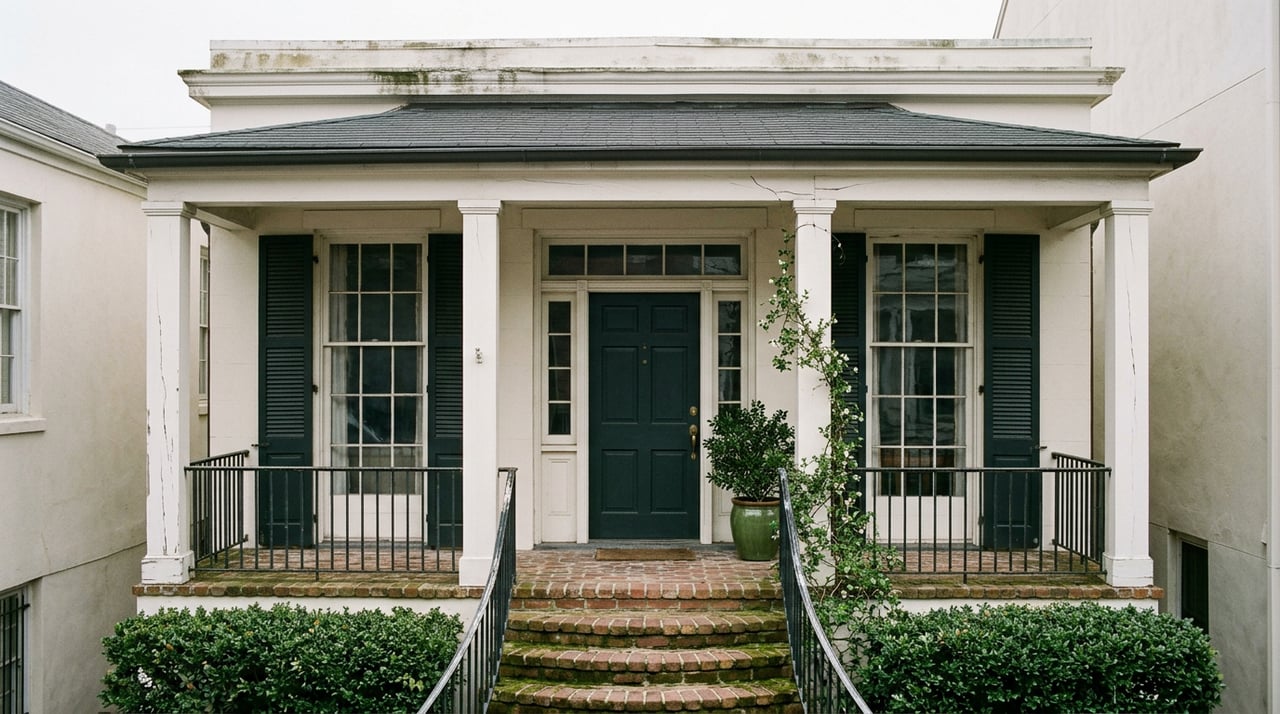
On February 11, 2026, the Savannah Historic District Board of Review sat through a routine Wednesday agenda and reached two very different conclusions about two very similar requests.
At 225 East President Street, the board approved a petition to reconstruct a collapsed staircase, finding the replacement visually compatible with the historic structure. At 8 East Broughton Street, it approved an illuminated wall sign for a ground-floor business, again citing visual compatibility. Then it reached 318 East Huntingdon Street, where an owner had already installed exterior alterations and was asking, after the fact, for the board to bless what was already built. The board denied it. The installed materials did not meet the district's design standards, and no amount of paperwork after the work was done could change that.
Same meeting. Same nine-member board. One approval for work done right, one denial for work done first and asked about later. That contrast is the whole story of what actually creates friction in a Historic District real estate transaction, and it has almost nothing to do with the home inspection.
The Question Due Diligence Usually Skips
Buyers moving through a Historic District purchase tend to focus their attention where every other home purchase teaches them to focus it: the roof, the foundation, the HVAC, the plumbing. Those checks matter here too. But a Historic District property can pass every point on a standard inspection and still carry a problem no inspector is trained to flag, because it isn't a condition issue. It's a paperwork issue.
Every exterior change visible from a public street or lane in Savannah's Historic District, from a repainted facade to a replaced window to a new fence, falls under the Certificate of Appropriateness process administered through the Metropolitan Planning Commission. A COA confirms the work meets the district's design standards. It is a separate approval from a building permit, and some projects need both. When a previous owner replaced a porch railing or swapped out original windows without going through that review, the home can carry an open compliance question that surfaces only when a new owner tries to sell, renovate, or refinance. The board's own February agenda even carries a standing item for exactly this: "Work Performed Without a Certificate of Appropriateness."
That is the gap a home inspection cannot close. An inspector checks whether the porch is structurally sound. Nobody checks whether the porch was ever approved to look the way it does.
What Actually Requires Board Attention
Not every project draws the same level of scrutiny. Savannah's process sorts work into three practical tiers, and knowing which one a project falls into is the difference between a ten-business-day turnaround and a multi-month wait.
| Tier | Typical work | Review path |
|---|---|---|
| Generally exempt | Interior renovations, ordinary maintenance, some work not visible from the street | No COA required, though confirming with staff first is smart |
| Staff-level review | Color changes, roof repair or replacement, stucco repair, brick repointing, shutters, in-kind window repairs | Handled administratively, typically within about ten business days |
| Full Board review | New construction, additions, demolition, alterations, signs, fences | Must be docketed for the board's monthly meeting |
The line between staff review and full board review is not always where an owner assumes it will be. Three or more staff-level items on a single application automatically bumps the whole project into full board review, and any work proposed for a non-contributing structure is an automatic board review regardless of scope. A homeowner planning what feels like a modest exterior refresh can find themselves waiting for a board date without realizing the threshold that pushed them there.
The Clock Nobody Budgets Into a Purchase Contract
The Historic District Board of Review meets once a month, the second Wednesday, at 112 East State Street. Applications requiring full board review must be complete a full four weeks before that meeting, with no exceptions for late submissions. Before an owner can even submit a project that will require board review, city ordinance requires a pre-application conference with planning staff first. Miss a monthly cutoff and the project doesn't wait a few days. It waits a month.
Stack those steps together, and a board-level exterior project realistically runs six to ten weeks from first submission to approval, on top of whatever separate building permit timeline applies. A carriage house conversion, one of the more common ways Historic District owners add living space, commonly takes eight to twelve weeks once both the COA and the standard building permit are factored in.
That timeline lands differently depending on the market it sits inside. In the South Historic District, the median sale price ran roughly $1.0 million in March 2026, down from a year earlier, with homes taking an average of 163 days to sell, up from 135 days the prior year, and only nine homes closing that month. When a market moves that slowly and that few transactions happen at all, a six-to-ten-week board review isn't a rounding error inside an already long timeline. It's a meaningful fraction of it, and it can be the difference between closing on the schedule a contract assumed and renegotiating that schedule mid-transaction.
The Part That Should Reassure Buyers
None of this means Historic District ownership is a paperwork obstacle course. The board's authority stops at the exterior. Kitchens, bathrooms, floor plans, and mechanical systems can be updated without a Certificate of Appropriateness, as long as the work stays inside the walls and any standard building permits are pulled. Plenty of Historic District homes carry thoroughly modern interiors behind facades that look exactly as they did a century ago, because the ordinance was written to protect what the street sees, not what happens behind a closed door.
There is also a genuinely interesting wrinkle in the ordinance worth knowing before assuming every exterior fix requires a hearing. A structure or fixture erected for fewer than 60 days within a 12-month period counts as temporary and doesn't trigger review, and boarding up a damaged window or door opening for up to 30 days is explicitly permitted without a COA. The ordinance also treats sustained neglect as its own kind of violation. Letting exterior walls, roofs, or windows deteriorate to the point of decay is defined as "demolition by neglect," and it is itself treated as an exterior alteration requiring a Certificate of Appropriateness to correct. Preservation here works in both directions. The rules that slow down a rushed change are the same rules that keep a neighbor from letting a contributing structure fall apart next door.
What to Check Before You Write an Offer or List
A Historic District purchase or listing benefits from a due diligence list that looks different from a standard one:
- Confirm which overlay or local historic district the property actually sits in, since design standards and review bodies differ by district
- Confirm whether the structure is rated contributing, since that status shapes how closely renovations get reviewed
- Ask for the property's Certificate of Appropriateness history and whether prior exterior work has documentation to match it
- Look closely at windows, roofs, porches, railings, and doors, the features that carry both the most resale value and the most review sensitivity
- Ask directly whether any exterior work appears undocumented, and build time for staff or board review into any closing or renovation timeline tied to exterior changes
None of these questions come up in a typical suburban transaction. In the Historic District, they are the questions that separate a smooth closing from one that stalls over something a home inspector was never asked to look for.
Frequently Asked Questions
Does every Historic District sale require a Certificate of Appropriateness? Selling the house itself does not trigger a COA. The requirement applies to exterior changes, not to a change in ownership. A sale can close without anyone applying for a COA at all, unless the transaction depends on exterior repairs or changes that fall under the review process.
Can an owner do exterior work first and get it approved afterward? An after-the-fact application is possible, but the February 2026 board minutes for 318 East Huntingdon Street show it is not a formality. The board reviews after-the-fact work against the same design standards as any other request, and materials that don't comply can be denied even after installation, which can mean removing or redoing the work.
How long should a buyer or seller expect a board-level project to take? Budget six to ten weeks for full board review on top of standard permitting, and eight to twelve weeks for a carriage house or accessory dwelling conversion. Staff-level approvals for smaller in-kind repairs move faster, typically within about ten business days once a complete application is submitted.
Buying or selling in Savannah's Historic District rewards the kind of local fluency that comes from watching these board decisions play out month after month, not just reading the ordinance once. If you're weighing a Historic District purchase, planning a sale, or trying to understand what a property's exterior history means for your timeline, The Agency Savannah can walk through it with you. Request your instant home valuation or schedule a private consultation.