If you are drawn to Savannah’s Historic District, you are probably not just shopping for square footage. You are looking for a home with presence, history, and a daily rhythm shaped by one of America’s most recognizable urban plans. Understanding the district’s architectural styles can help you look past curb appeal and see how a property may actually live, what it may require, and where it may fit your goals. Let’s dive in.
Why architecture matters here
Savannah’s Historic District is deeply tied to the city’s original plan. Laid out in 1733 around wards and squares, the district still includes 22 of the original 24 squares and more than 1,100 residential and public buildings.
That context matters because a home’s style here is not just aesthetic. Its layout, lot placement, access, and even parking often connect directly to the historic street grid, rear lanes, and preservation rules that shape daily ownership.
The district was designated a National Historic Landmark District in 1966, and the City of Savannah now reviews many exterior changes in the downtown historic district. So when you compare homes, you are often comparing both architectural character and a very specific ownership experience.
Federal and Georgian homes
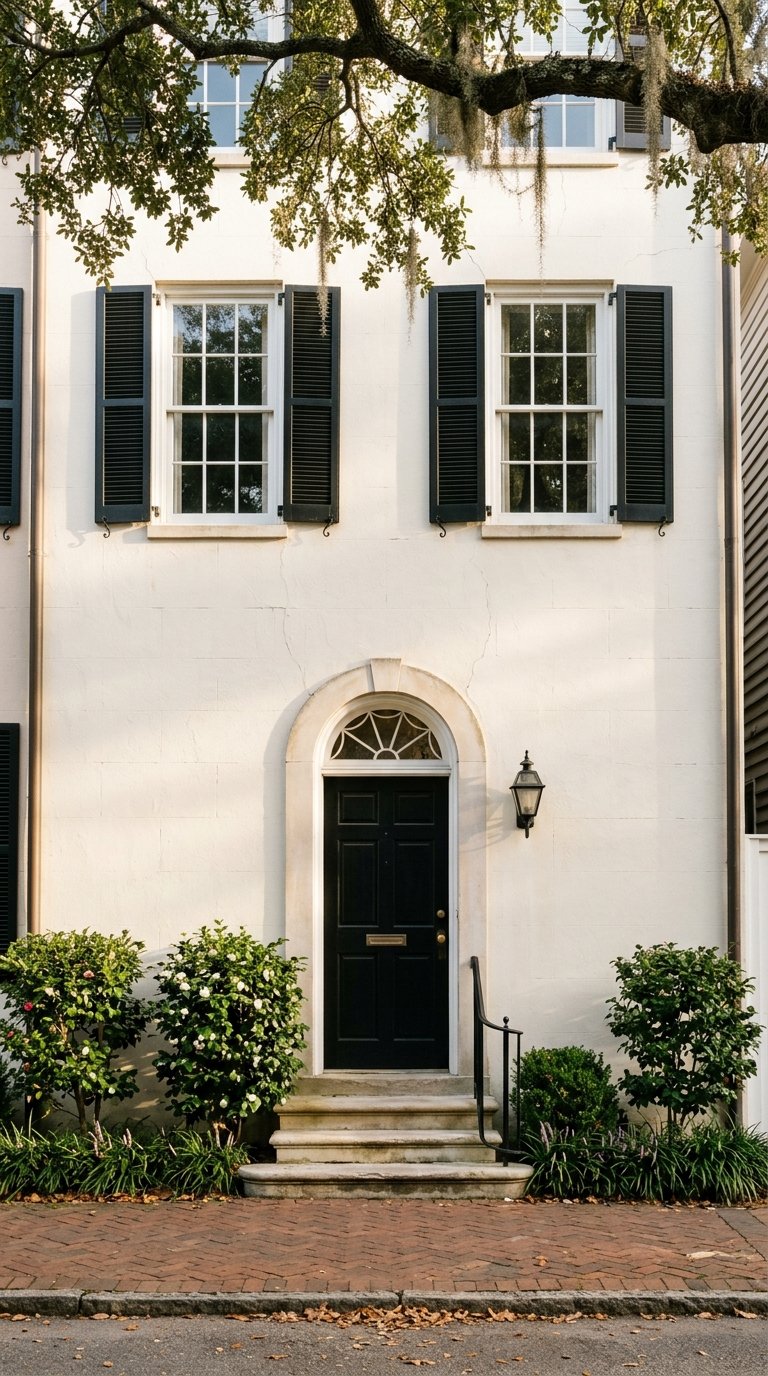
Federal and Georgian houses are among the district’s most recognizable early forms. In Savannah, the two labels can overlap, but both styles are known for symmetry, classical proportions, and a restrained sense of detail.
In practical terms, these homes often appeal to buyers who want a dignified street presence and a clear, orderly feel inside. Federal houses are typically square or rectangular with hipped roofs and modest ornament, while Georgian homes emphasize balance and formal entry composition.
If you are drawn to clean lines over decorative flourish, this category may feel especially appealing. The tradeoff is simple: these are older buildings, and older buildings usually come with the maintenance expectations that accompany age.
What this style feels like
For many buyers, Federal and Georgian homes feel calm and composed. Rooms often read as intentional and structured rather than casual or irregular.
That can be a major advantage if you value timeless design. It can also mean accepting that charm here comes through proportion and restraint, not dramatic extras.
Victorian homes
Victorian architecture in Savannah is best understood as a broad late-19th-century category, not a single uniform look. These homes often bring visual variety, stronger ornament, and more personality to the streetscape.
Common Victorian-era features include asymmetrical massing, towers or turrets, wraparound porches, spindlework, decorative shingles, overhanging roofs, and bracketed eaves. For some buyers, that layered detail is exactly the appeal.
For others, it is important to think honestly about upkeep. More exterior detail can mean more surfaces, more visible elements, and more attention over time, especially in a district where exterior changes are closely reviewed.
What this style feels like
Victorian homes tend to reward buyers who love individuality. They can feel expressive, romantic, and memorable in a way more formal styles do not.
At the same time, floor plans may feel less standardized than what you would find in newer construction. If you want character and are comfortable with a little complexity, Victorian architecture can be a compelling fit.
Rowhouses and townhomes
Savannah rowhouses are a distinct historic house type shaped by the city’s urban fabric. They are commonly built as contiguous side-hallway houses, typically two rooms deep with an interior stair hall along one side.
This is one of the clearest examples of architecture expressing lifestyle. Rowhouses and townhomes usually feel more compact, more street-oriented, and more connected to the surrounding city than detached homes.
If your priority is living in the middle of the Historic District experience, this format can make a lot of sense. You may give up a larger yard, but you often gain a stronger connection to sidewalks, squares, and the neighborhood rhythm around you.
What this style feels like
These homes often suit buyers who value walkability and a tighter footprint. They are especially well matched to people who want a city-first lifestyle rather than a suburban pattern of house, driveway, and broad setbacks.
Parking can also feel different here. In the Historic District, access is often structured around lanes and service streets instead of the driveway setup many buyers expect elsewhere.
Carriage houses
Carriage houses are one of Savannah’s most distinctive property types, and they are more than just a charming design idea. In the city code, historic carriage houses and garages are treated as accessory structures, typically located to the rear of the property.
That rear-lot placement helps explain both their appeal and their constraints. Buyers are often attracted to the smaller footprint, the sense of privacy, or the possibility of a secondary dwelling, but city rules also limit how these structures can be changed.
For example, original entry dimensions cannot be modified, expansions cannot occur on the lane side, and garage openings are limited in width. Garage doors facing streets or sidewalks should resemble carriage house doors.
What this style feels like
Carriage house living can be ideal if you want something compact and highly specific to Savannah. It often works well for buyers who value charm, location, and efficient use of space.
It is less ideal if you want broad site flexibility. Parking access is typically lane-oriented, curb cuts are limited, and service elements like HVAC equipment and refuse areas must be screened from public view.
Adaptive reuse and luxury conversions
Some of the district’s most interesting homes fall into the category of adaptive reuse. This means a historic building has been rehabilitated for a use other than its original purpose, often preserving the exterior while creating a more modern interior experience.
For buyers, the appeal is clear. You may find a property that offers historic presence on the outside and a more updated way of living on the inside.
Still, flexibility has limits. Even when interiors are modernized, preservation standards can continue to shape additions, utilities, and exterior changes.
What this style feels like
Adaptive reuse often appeals to buyers who want something unique and design-forward. It can offer a compelling middle ground between old-house character and updated interiors.
The key is to look carefully at layout and constraints. A conversion may be beautiful and highly functional, but it may also reflect the quirks of the original structure.
How preservation affects ownership
One of the most important realities of owning in Savannah’s Historic District is the City’s review of exterior work. A Certificate of Appropriateness is required for many material exterior changes, and it must be approved before construction begins, even when a building permit is not required.
Routine maintenance that does not change design, materials, or exterior appearance does not require that certificate. The Historic District Board of Review focuses on exterior visual quality rather than interior arrangement.
That distinction matters if you are comparing homes based on renovation potential. Interiors are often the more flexible part of the equation, while facades, additions, fences, visible mechanical systems, and demolition are more tightly regulated.
What buyers should keep in mind
The code prohibits front additions on historic buildings. It directs additions to the rear or the most inconspicuous side, and it requires additions to remain subordinate in mass and height.
Mechanical equipment should also be screened from public view. If you are considering updates, these rules are not a reason to walk away, but they are a reason to evaluate a property with clarity.
Parking, access, and everyday convenience
In the Historic District, architecture and access go hand in hand. Downtown properties may have no setback requirement, and parking access is generally directed through lanes or service streets where possible.
That can feel very different from newer neighborhoods. If there is no lane access, curb cuts may be limited, which changes how you think about parking, entry, and exterior site use.
This is why style should always be considered alongside function. A beautiful house in Savannah’s Historic District may also ask you to adapt to a more urban pattern of living.
A simple way to compare styles
If you are trying to narrow your search, it helps to think of Savannah’s Historic District as a lifestyle spectrum.
- Most formal and least ornate: Federal and Georgian homes
- Most decorative: Victorian homes
- Most urban and compact: Rowhouses and townhomes
- Most site-constrained: Carriage houses
- Most flexible in concept: Adaptive reuse and luxury conversions
That framework can help you move beyond “Which style do I like?” and ask a better question: “Which style fits the way I want to live?”
What to consider before you buy
Before you fall in love with the details, step back and think about the ownership experience. In Savannah’s Historic District, architecture often signals your likely relationship to privacy, parking convenience, ornament, and renovation flexibility.
If you love symmetry and quiet elegance, a Federal or Georgian home may fit naturally. If you want visual drama and individuality, a Victorian property may be more your speed.
If you want a compact urban lifestyle, rowhouses and townhomes deserve close attention. If you are intrigued by a smaller footprint or a secondary structure, carriage houses may stand out. And if you want historic character with a more updated interior feel, adaptive reuse may offer the right balance.
Savannah rewards buyers who look closely and ask practical questions early. That is especially true in the Historic District, where the beauty of a home and the realities of living in it are often inseparable.
If you are considering a purchase in downtown Savannah, The Agency Savannah offers private consultations, buyer representation, and valuation guidance tailored to historic properties and lifestyle-driven moves.
FAQs
What architectural styles are common in Savannah’s Historic District?
- Common property styles and types include Federal and Georgian homes, Victorian homes, rowhouses or townhomes, carriage houses, and adaptive reuse conversions.
What should buyers know about Historic District renovations in Savannah?
- Many exterior changes in Savannah’s downtown historic district require a Certificate of Appropriateness, while routine maintenance that does not change design, materials, or exterior appearance generally does not.
What makes Savannah rowhouses different from detached homes?
- Savannah rowhouses are a compact urban house type, typically two rooms deep with a side stair hall, and they usually offer a more street-oriented lifestyle with less emphasis on large yards.
What should buyers know about carriage houses in Savannah’s Historic District?
- Carriage houses are generally rear-lot accessory structures, and city rules limit certain changes such as entry dimensions, lane-side expansions, and some garage-opening configurations.
Can you use a Savannah Historic District home as a short-term vacation rental?
- The City of Savannah defines a short-term vacation rental as lodging for transient guests for no more than 30 consecutive days, and Downtown and Victorian district STVRs are subject to a 20% cap of residential parcels within each ward, with owner-occupied parcels exempt.
Why does architecture affect daily life in Savannah’s Historic District?
- In Savannah’s Historic District, style often connects directly to lot layout, rear-lane access, parking patterns, preservation review, and how much flexibility you may have for exterior changes.