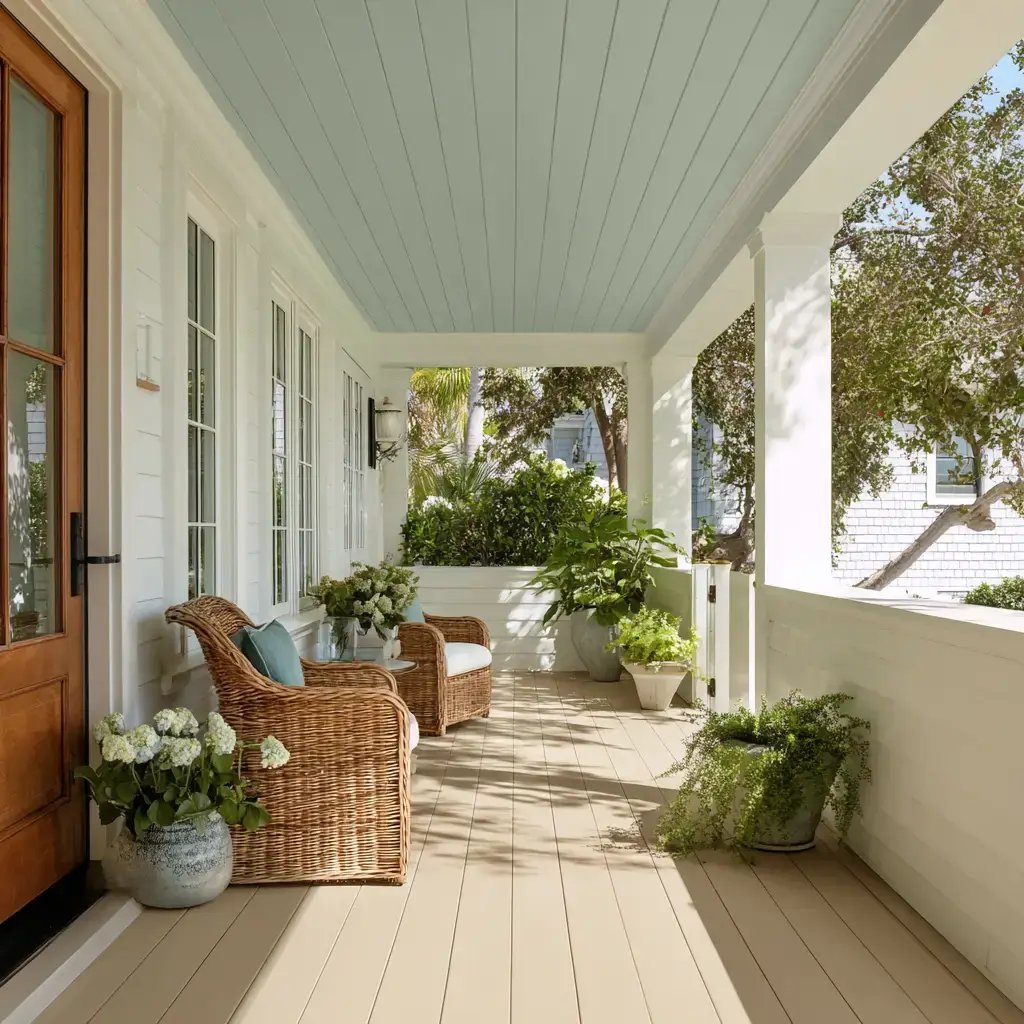
Why Savannah's Porch Ceilings Are Painted "Haint Blue"
Walk down almost any street in Savannah's historic district and look up. Beneath the wraparound verandas and Greek Revival porticoes, you'll notice something the postcards rarely capture: porch ceilings painted in a soft, watery blue-green. It's easy to mistake for a decorating trend, but this color carries centuries of history, culture, and, depending on who you ask, a little bit of protection from the other side.
It's called haint blue, and it's one of the most quietly fascinating details in Savannah's architecture. Here's where it comes from, and why it still matters to homeowners today.
The Gullah Geechee Origins of Haint Blue
The tradition traces back to the Gullah Geechee people, descendants of Central and West Africans enslaved on the rice, indigo, and Sea Island cotton plantations along the coasts of Georgia and South Carolina. Haint blue refers to a collection of pale blue-green shades traditionally used to paint porch ceilings throughout the American South, a tradition that originated with the Gullah in Georgia and South Carolina.
The color itself has deep roots in the region's plantation economy. The historical pigment relied on ingredients like lime and indigo, materials that may have also served the practical purpose of repelling insects. Early paint was made by hand, using whatever was available, which is part of why there's no single, official "haint blue", just a family of soft, sky-toned hues.
One of the earliest documented examples sits right here in Savannah. The ceiling of the slave quarters at the Owens–Thomas House, built in the early 19th century, was painted haint blue.
Why Blue? The Folklore Behind the Ceilings
The word "haint" is a regional variation of "haunt," referring to restless spirits or ghosts. According to Gullah Geechee tradition, the blue coloring was meant to trick haints into believing the porch ceiling was the sky. Since spirits were believed to be unable to cross water, painting a ceiling to resemble open sky or water was thought to stop them from entering the home.
Some households extended the practice beyond the porch. Doors and window frames were sometimes painted the same shade, reinforcing the idea that spirits would be confused about how to find their way inside.
Over time, the tradition moved well beyond its origins. By the late 19th century, haint blue had spread from Gullah communities into wider Southern culture, becoming a design element embraced by Southerners of all backgrounds. It's worth noting that not every account agrees on how universal the belief was; some Gullah Geechee community members have pushed back on the idea that every blue ceiling was intentionally protective, noting that if warding off spirits were the rule, every home on the coast would be painted blue. Historians largely agree the color holds real cultural weight, even if its exact meaning has always varied from household to household.
A Tradition That's Still Everywhere in Savannah
Today, haint blue isn't a relic; it's a defining feature of Lowcountry curb appeal. The color remains popular enough that major paint brands now sell dedicated "haint blue" formulas, and it shows up on everything from grand historic mansions to small cottages tucked along quiet lanes.
For homeowners, it's a detail that adds instant character. A haint blue ceiling signals that a home is tuned into the region's history, whether it's an original 19th-century build or a newer home embracing the tradition. It's also a small, affordable upgrade that can make a front porch feel more finished, more inviting, and more distinctly Savannah.
What to Look For When Home Shopping
If you're touring homes in Savannah's historic squares or surrounding neighborhoods, haint blue porch ceilings are worth paying attention to for more than just their charm:
- Original haint blue ceilings can be a sign of a home's age and authenticity, particularly in historic district properties.
- Well-maintained exterior details, like porch ceilings, shutters, and trim, often reflect how well a home has been cared for overall.
- A haint blue ceiling is an easy addition if you fall in love with a home that doesn't have one yet, it's one of the simplest ways to bring a little Lowcountry tradition to any porch.
Whether you're drawn to the folklore, the color itself, or the layers of history behind it, haint blue is a small architectural detail that says a lot about where you live. It's one more reason Savannah's homes feel like they hold stories in every corner, porch ceilings included.
FAQ
What is haint blue? Haint blue is a pale blue-green paint color traditionally used on porch ceilings throughout the American South, originating with the Gullah Geechee communities of coastal Georgia and South Carolina.
Why do Southern homes have blue porch ceilings? According to Gullah Geechee folklore, painting a porch ceiling blue was meant to resemble water or sky, tricking evil spirits, or "haints," into believing they couldn't enter the home, since spirits were believed to be unable to cross water.
Where did the haint blue tradition originate? It originated with the Gullah Geechee people, descendants of enslaved Africans who worked the rice, indigo, and cotton plantations along the coasts of Georgia and South Carolina. One of the earliest known examples is at Savannah's Owens–Thomas House.
Is haint blue just a Savannah tradition? While closely associated with Savannah and the Lowcountry, the tradition has spread throughout the South and is now a widely embraced design choice regardless of a homeowner's background.
Does painting a porch ceiling blue actually keep bugs away? Some historians believe the lime used in traditional haint blue paint may have acted as a natural insect deterrent, though this is separate from its folkloric purpose of warding off spirits.
Can I add a haint blue ceiling to my own home? Yes. Many paint brands now offer dedicated haint blue colors, making it an easy and affordable way to add historic character to any porch, regardless of the home's age.